The challenge: dealing with data deluge
Tackling some of the biggest data challenges in the world of physics and astronomy
The ODISSEE project is addressing some of the most significant data challenges in physics and astronomy. With the future commissioning of the High-Luminosity Large Hadron Collider (HL-LHC) and the Square Kilometre Array Observatory (SKAO), the community of physicists will have to deal with vast amounts of data, that current technical technologies can’t process.
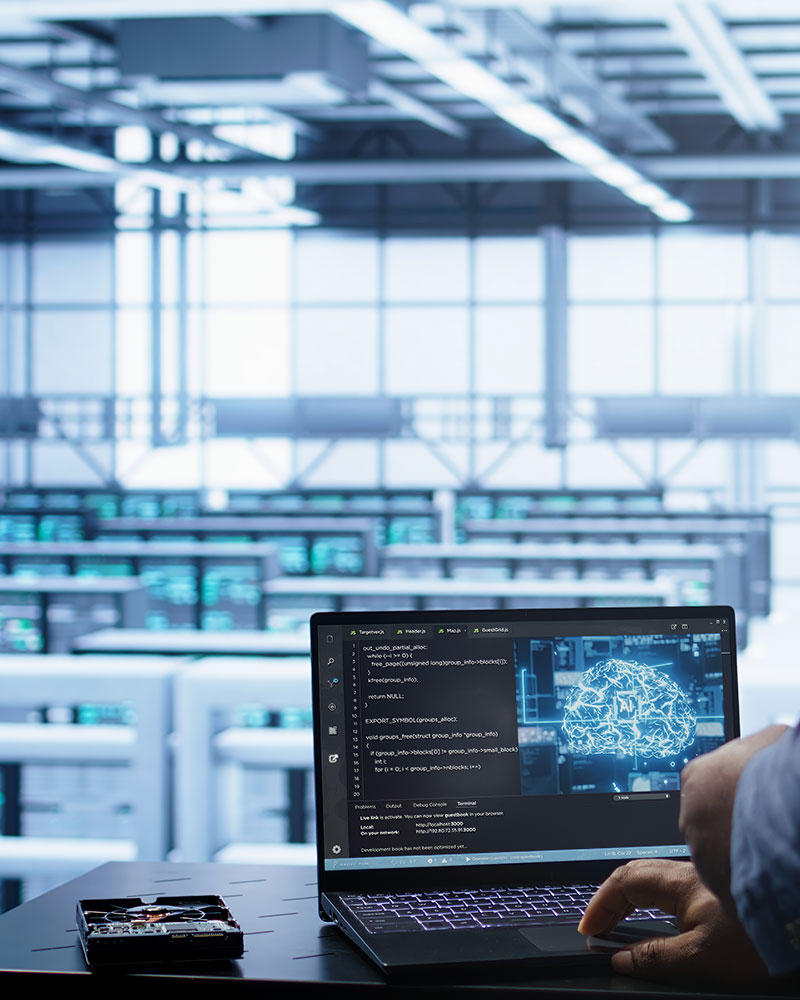
To cope with this challenge, the ODISSEE project aims to revolutionise the way we process, analyse and store data. We are developing new technologies using AI to process and filter only the relevant data into the data stream on the fly. This approach will enable scientists to build more complex, yet reliable, physical models, whether at micro or astronomical scale.
At the same time, the project also focuses on redesigning hardware and software solutions that cover the entire data stream continuum, from generation to analysis. The primary objective is to create tools that are energy efficient, adaptable and flexible for the future. This will involve the development of a reconfigurable network of diverse processing elements driven by AI.
The project in details
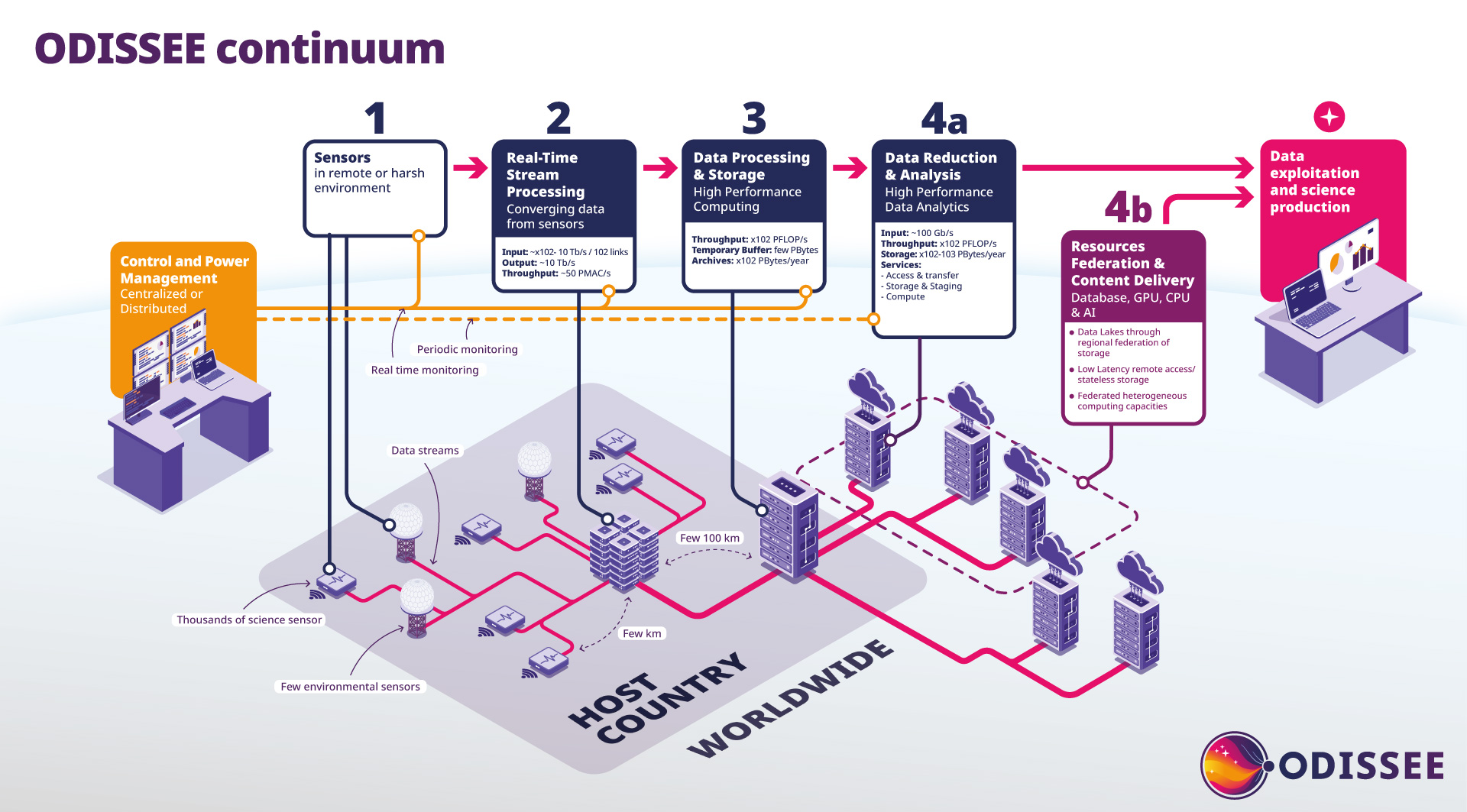
The ODISSEE approach covers the entire digital continuum needs for both the HL-LHC and SKAO projects, from data collection to analysis.
1
Data collection
The initial process starts with a collection of distributed science sensors, such as antennas or particle detectors, which gather raw data. These sensors are complemented by monitoring and environmental sensors to ensure accurate calibration and facility maintenance.
2
Real-Time Stream Processing
This second stage involves collecting, filtering, and converging raw data streams in real-time. This step is crucial for handling the immense data throughput without any loss in quality. It occurs locally, near the science sensors.
3
Data Processing and Storage
The third phase focuses on processing and reducing the incoming data streams into science data products. This is achieved using state-of-the-art High-Performance Computing (HPC) facilities, which must meet demanding specifications for data ingestion, computation, and storage.
4
Data Reduction and Analysis
The final stage is designed to deliver actionable data products and provide the means to process and analyze them. This is supported by a network of data centers, both locally and internationally, ensuring efficient data distribution and analysis.
News and events
Follow us

ODISSEE Webinar: How can we assess the AI and HPC environmental and societal impacts?
Join us for a 45-minute webinar ! Generative AI and Agentic AI are revolutionizing the way we consume digital services, specially in High...
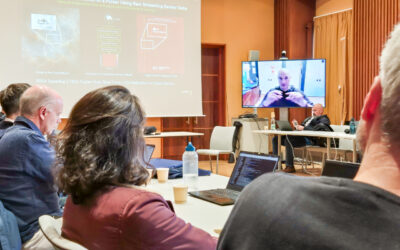
ODISSEE GPU Hackathon – Bordeaux, 12 to 15 October 2026
The next ODISSEE GPU Hackathon will take place in Bordeaux from 12 to 15 October, bringing together project partners and technical experts to...
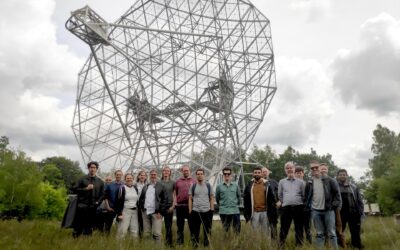
First ODISSEE hackathon: Exploring sustainable computing for next-generation radio astronomy
Could you briefly introduce yourself and ASTRON? My name is Chris Broekema. I am a researcher in high-performance computing at ASTRON, the...