Webinar
ODISSEE Webinar
Optimizing AI Workflows on HPC: From Hyperparameter Tuning to Scientific Use Case Integration
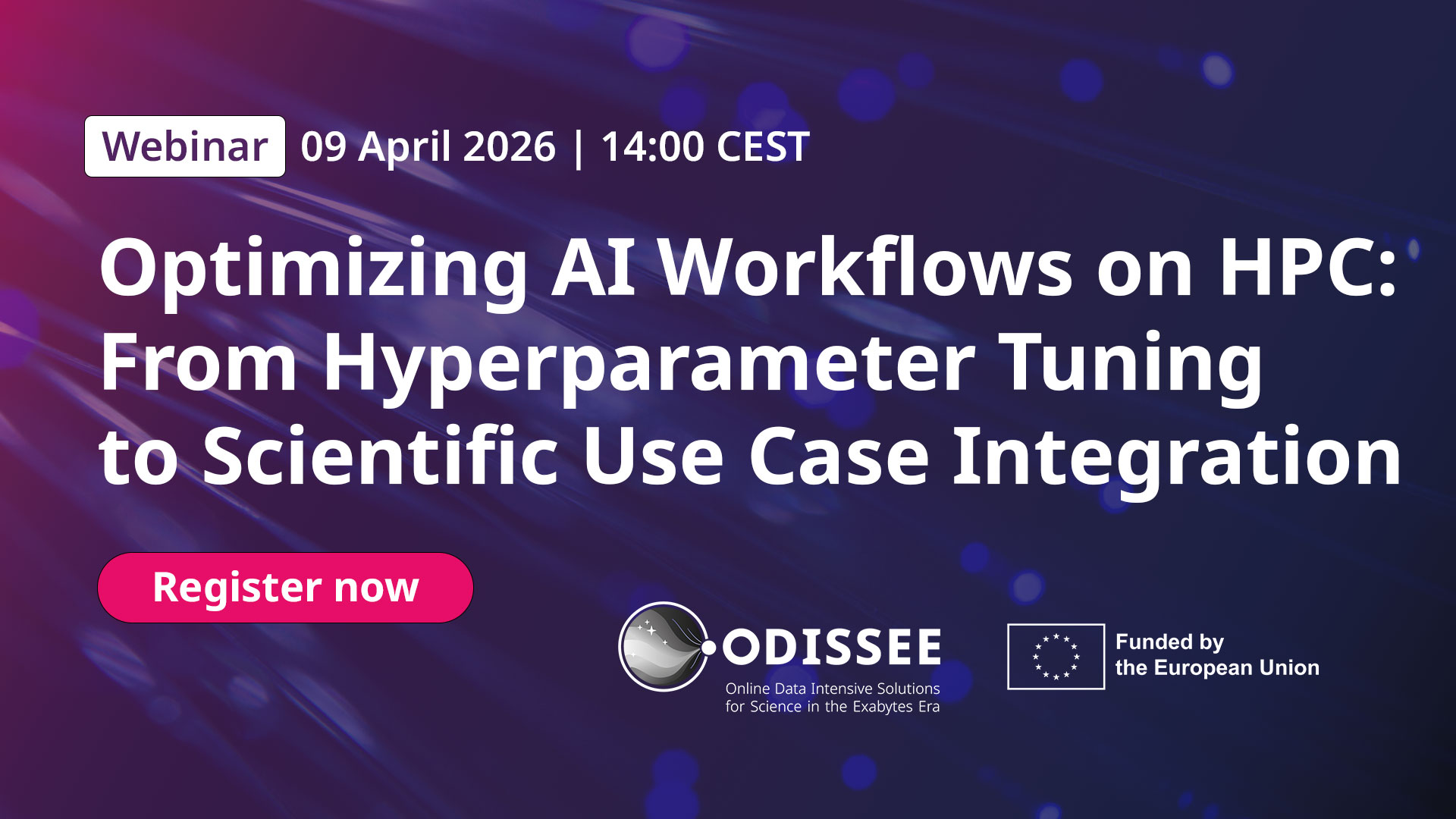
Join us for a 60-minute webinar ! Modern AI development increasingly depends on efficient, scalable workflows that can take full advantage of High-Performance Computing (HPC) systems. This webinar brings together three complementary perspectives on how to optimize the AI lifecycle on HPC, from model tuning to workflow orchestration and scientific application integration.
Together, these talks provide an overview of the tools, methods, and use cases that are shaping the next generation of scalable AI on HPC systems.
This presentation introduces hyperparameter optimization (HPO) as a key technique for improving machine learning and deep learning models, highlighting both the practical challenges of large-scale tuning and the opportunities offered by HPC platforms, with examples from high-energy physics.
The second talk presents itwinai, an emerging framework designed to simplify and streamline AI workflows across distributed computing environments.
The final talk focuses on the integration of domain-specific scientific use cases within itwinai, showing how such tools can support real research applications and help bridge the gap between AI infrastructure and scientific discovery.
📍 Online
📆 April 9
🕑 From 2PM to 3PM CEST
First presentation
Accelerating Hyperparameter Optimization with HPC systems
This presentation introduces hyperparameter optimization (HPO) as a key technique for improving machine learning and deep learning models, highlighting both the practical challenges of large-scale tuning and the opportunities offered by HPC platforms, with examples from high-energy physics.
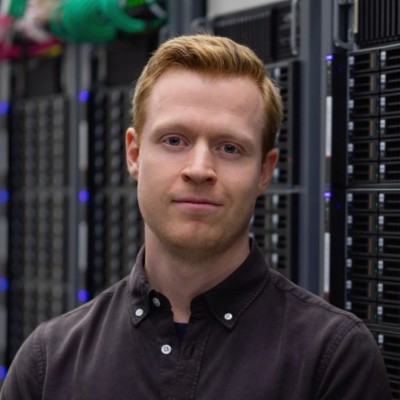
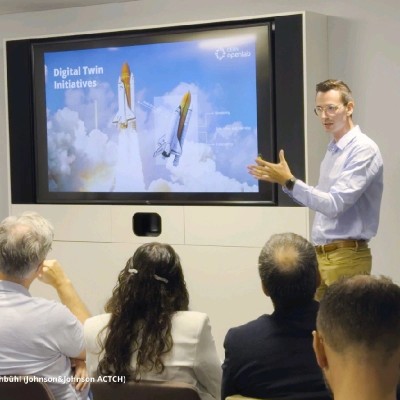
Eric Wulff
Senior Machine Learning Engineer at CERN
Second presentation
Overview of itwinai
The second talk presents itwinai, an emerging framework designed to simplify and streamline AI workflows across distributed computing environments.
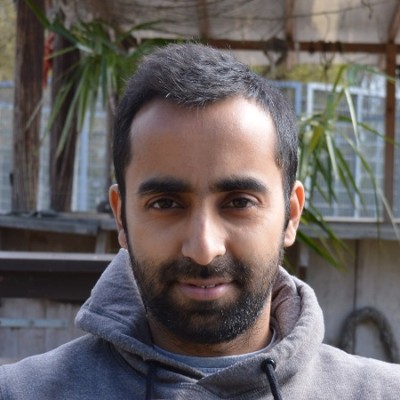
Matteo Bunino
Digital Twin Computing Engineer at CERN
Third presentation
Integration of Scientific Use Cases in itwinai
The final talk focuses on the integration of domain-specific scientific use cases within itwinai, showing how such tools can support real research applications and help bridge the gap between AI infrastructure and scientific discovery.
Rakesh Sarma
Researcher in Machine Learning, Computational Fluid Dynamics, Uncertainty Quantification and Data Assimilation at Forschungszentrum Jülich.
Fill in the form to register
News and events
Follow us
ODISSEE Webinar: How European technologies drive smarter and greener HPC
Join us for a 60-minute webinar exploring how European actors are preparing HPC systems for the massive data challenges of tomorrow. Experiments...
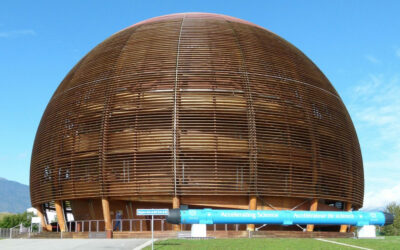
ODISSEE Consortium Meeting – January 20–22, 2026
The ODISSEE project team is pleased to announce that the next ODISSEE consortium meeting will be held from 20 to 21 January 2026 at Building 31 at...

ODISSEE Webinar: how to shape trust in the age of data deluge and AI-driven processing?
Join us to learn about the future of online data processing in the realm of giant research infrastructures ! In this 45-minutes webinar we will...