Deliverables
To assess the progress of activities, the European Commission requires funded projects to submit periodic reports, referred to as “Deliverables,” detailing the undertaken tasks. These reports, whether confidential or public, must gain approval from the European Commission to be considered valid and accurate.
In alignment with the spirit of transparency in ODISSEE, we are sharing the deliverables approved by the European Commission.
ODISSEE is organized into eight distinct Work Packages, each comprising a set of related tasks crucial for advancing project activities. Within these work packages, specific project partners leverage their knowledge and skills to implement tasks and deliverables. Explore further details about our work in each Work Package and the completed Deliverables to date.
WP 1 – Converged Science Programs
Improve sensitivity, resolution and science yield of SKAO and LHCb at HL-LHC, so as to enable the implementation of key science projects across the physics continuum, and using the search for the origins of Dark Matter as a pilot program
ODISSEE - D1.1: Converged Science Programs Specifications Capture Document
Author: GLIGOROV Vladimir
Contributors: GRATADOUR Damien, Girone Maria, Neufeld Niko, TOLLEY Emma, XANDRI Bernat, BROEKEMA Chris
This document outlines a converged science program between the LHCb experiment at CERN and the Square Kilometre Array Observatory (SKAO), focusing on the search for Dark Matter. It details how both facilities face similar extreme data processing challenges due to the unprecedented volume of data generated, requiring real-time processing and efficient data management. The paper highlights the potential for knowledge and methodological transfer between the two distinct scientific communities, proposing the sharing of simulated data samples and the development of modular, interoperable software components to maximize their scientific output and efficiently address the persistent mystery of Dark Matter.
WP 2 – Composable Data Interfaces
ODISSEE - D2.1: Composability Specifications Document
Contributors: GLIGOROV Valdimir, PEREZ Christian, BROEKEMA Chris
This document outlines the initial specifications for software composability within the ODISSEE project, aiming to enhance data-intensive solutions for science. It details two primary use cases: radio-astronomy with SKAO and high-energy physics with LHCb, describing their data processing, transport, and emulation needs. The report explores various hardware technologies like CPUs, GPUs, FPGAs, and DPUs that will be leveraged, emphasizing the importance of flexible and scalable workflows. Finally, it introduces the ODISSEE Composability Specifications (OCS), a component model designed to simplify the assembly and interoperability of software components for complex scientific applications.
WP 3 – Hardware platform demonstrators
ODISSEE - D3.1: Technical design and description of proof-of-concept hardware
Contributors: RENAULT Etienne, BUNINO Matteo, CARCENAC Albane, GIRONE Maria, TROTTER James D., MARGOLIN Alex, MARGALIT Oded, PEREZ Christian
This document describes the hardware proof of concept system developed for the ODISSEE project, based on primarily European digital IP. The goal of the hardware proof of concept is to demonstrate the ability to both design and utilise a cost-effective and suitable hardware system for both radio astronomy and high-energy physics applications that is both fit for purpose and efficient compared to the current state of the art.
WP 4 – Efficient Software Ecosystem
Co-design of parallel programming models and software frameworks for energy-aware HPC and AI, to enable efficient implementations of the targeted science use cases on a variety of hardware platforms and configurations from the European ecosystem
ODISSEE - D4.1: Software Framework Requirements Capture & Integration Plan
Author: MORAGUES Jaume
Contributors: QUINONES Eduardo, ROYUELA ALCAZAR Sara, XANDRI Bernat, Bourramouss el Maach, Ayman
The goal of this document is to describe the best way of ensuring maximum resource usage, while taking into account certain aspects, like sustainability, of data processing pipelines in ODISSEE. In particular, we present the current status of platforms Allen (LHCb) and SKAO (including precursors). We describe possible programming models and tools in order to achieve such performance and finally we describe on which hardware platforms we aim to deploy such software stacks. This report places the relevant pieces (use cases, end users, tools & programming models and hardware) in such a way that it depicts the project’s big picture and so facilitates proper technical decisions which shall lead to the fulfilment of project ODISSEE goals.
WP 5 – Operations Intelligence
WP 6 – Training & Exploitation
ODISSEE - D6.1: Training Strategy Definition Document
Contributors: BELLON Brice-Edine, PEREZ Christian, TROTTER James D., LECHANTRE Guillaume, FERNANDEZ Pablo, PATE Michelle, BROEKEMA Chris, GIRONE Maria, MORRIS Andy, OONK Raymond, BADIA Rosa M.
This deliverable outlines the training strategy defined in Task 6.1 to support the organisation of training sessions for ODISSEE partners. It provides a concise overview of available training opportunities, including classical and advanced HPC training, testbed activities, HPC centre programmes, and specialised events. It also presents the overall approach for delivering training within ODISSEE and introduces an initial use case aimed at generating immediate impact and informing improvements to SLICES-RI, particularly through the specification of training-oriented services.
WP 7 – Project Management
ODISSEE - D7.1: Quality Assurance and Risk Management Plan
Contributors: FERRE Clémentine, PROT Romie
This document outlines the quality assurance and the risk management plan for the project and sets out the relevant procedures to be adopted by the consortium. Additional and more specific procedures will be listed and described in the D7.2 & D7.3 on Project Data Management (initial and final version).
ODISSEE - D7.2: Initial Project Data Management Plan
Contributors: PEREZ Christian, OONK Raymond
This deliverable provides the Initial project Data Management Plan of the ODISSEE project, describing the comprehensive life cycle of the data to be considered, collected, processed and generated throughout the project.
WP 8 – Outreach
ODISSEE - D8.1: Dissemination & Exploitation Plan, including Communication Activities - Initial
Contributors: GRATADOUR Damien
The ODISSEE (Online Data Intensive Solutions for Science in the Exabytes Era) project aims to develop more efficient, less energy-intensive and more flexible solutions for processing the deluge of data that will be generated by upcoming planetary research infrastructures such as CERN LHCb and SKAO. To achieve this goal, the project will notably design Prove of Concepts of data stream processing.
An essential step will be the Dissemination, Exploitation, and Communication Plan aimed at guaranteeing a significant uptake of the results. The communications and dissemination activities will target each of the identified stakeholder groups. The stakeholder groups presented in this deliverable reflect and further expand upon the priority target audiences identified during the proposal phase, namely key research infrastructures (e.g. SKA, LHC, SLICES-RI), other data-intensive RIs, the European ICT industry, ICT experts, R&I initiatives, and the general public.
To ensure sufficient result exploitation, the applied methodology will include the creation of relevant content for each stakeholder group and their engagement. Some of the tools that will be used include press releases, mailing, social media, events, and webinars and will lead to the project website to monitor efficiently all the dissemination and communication activities.
Preliminary exploitation measures have been conceived, but feedback from stakeholders and the maturation of the project’s KERs will contribute to the elaboration of the exploitation plan, which will be updated during the next iterations of this document.
News and events
Follow us
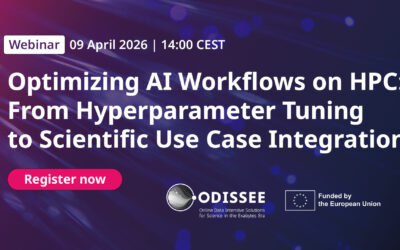
ODISSEE Webinar: Optimizing AI Workflows on HPC – From Hyperparameter Tuning to Scientific Use Case Integration
Join us for a 60-minute webinar ! Modern AI development increasingly depends on efficient, scalable workflows that can take full advantage of...

ODISSEE Webinar: How European technologies drive smarter and greener HPC
Join us for a 60-minute webinar exploring how European actors are preparing HPC systems for the massive data challenges of tomorrow. Experiments...
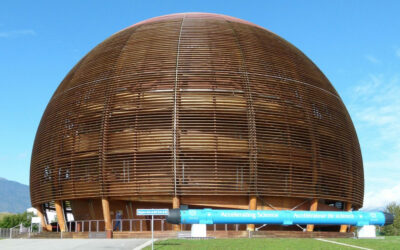
ODISSEE Consortium Meeting – January 20–22, 2026
The ODISSEE project team is pleased to announce that the next ODISSEE consortium meeting will be held from 20 to 21 January 2026 at Building 31 at...